
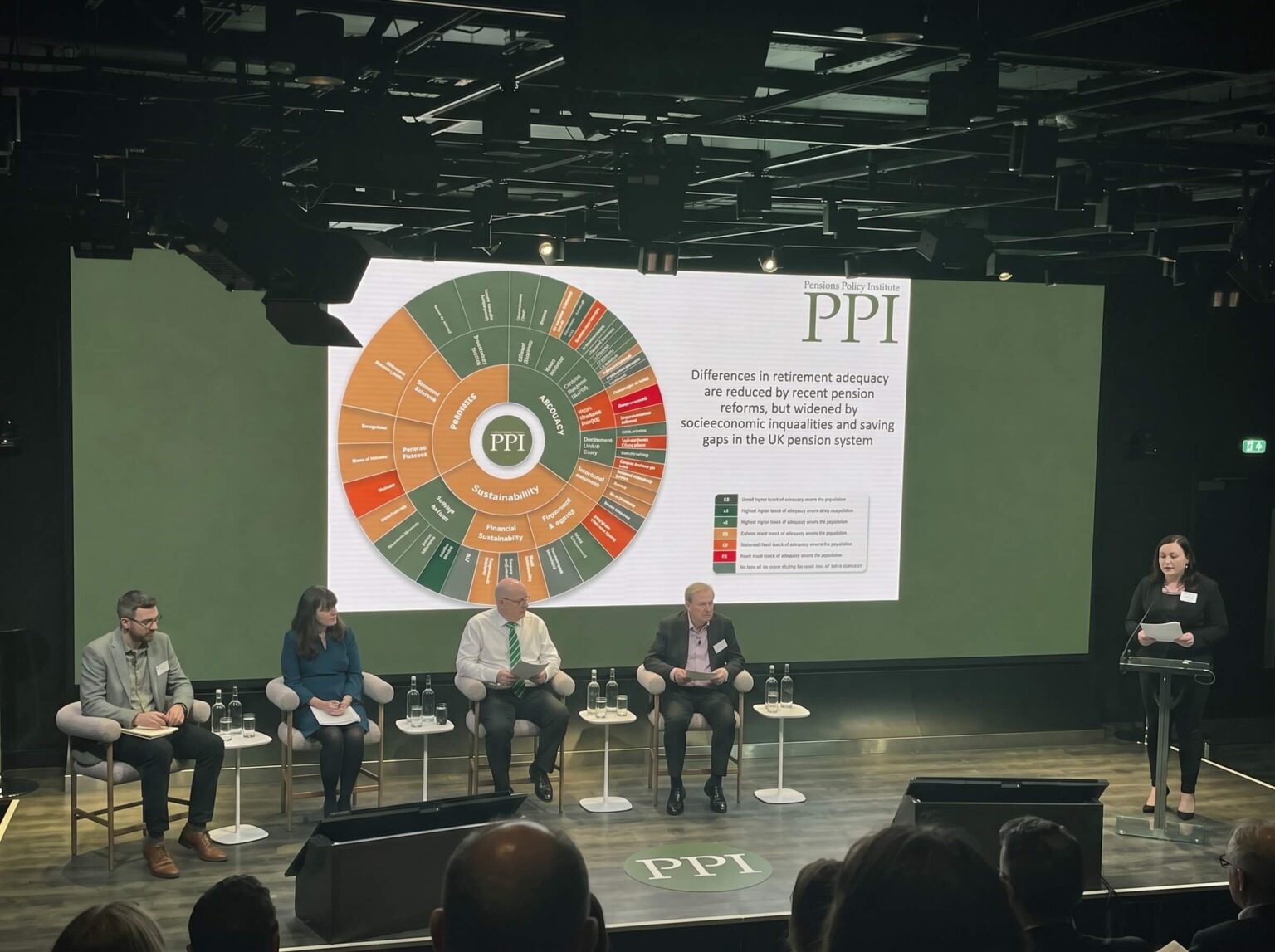
If you have ever tried to make sense of your workplace pension, wondered whether auto-enrolment is really saving you enough, or scratched your head at how the state pension triple lock actually works, you have almost certainly benefited from the work of an organisation you have probably never heard of.
It is called the Pensions Policy Institute, or the PPI, and for more than two decades it has quietly shaped almost every significant pension reform to pass through Westminster. This article takes a detailed look at who they are, what they actually do day to day, and why both ordinary pension savers and the UK government rely on them so heavily.
Who Are They?
The Pensions Policy Institute is, at its core, a registered educational charity. It was formally established on 22 January 2001, and its origins say a lot about why it exists. Back in 1997, Harriet Harman, then Secretary of State for Social Security, brought together an independent panel of experts, the Pension Provision Group, chaired by Tom Ross OBE, to examine the state of pension provision in Britain.
Their conclusion, published in a report titled We All Need Pensions, was blunt: the country needed a permanent, government-independent body whose sole job was to accumulate, analyse, and publish reliable information about pension provision, both present and future.
The PPI was created to be exactly that body, and it has held that role ever since, describing itself as a constant “voice of reason” in the ongoing debate about the future of retirement in the UK.
Crucially, the PPI is not part of government, nor is it a trade body, a regulator, or a financial services firm with products to sell. It is an independent, not-for-profit research institute that describes itself as the UK’s leading independent authority on pensions and retirement policy.
Its funding comes from a mixture of supporter subscriptions, charitable donations, grants, and fees earned from commissioned research, a deliberately diverse funding base designed to protect its independence and prevent any single funder, whether that’s an insurer, a pension provider, or a government department, from being able to steer its conclusions.
As a registered charity, its trustees receive no remuneration or personal benefit, which reinforces the sense that this is a body built to serve the public interest rather than any commercial one.
What Do They Actually Do?
The Pensions Policy Institute’s mission can be boiled down to a simple but ambitious idea: too few people understand pensions and what is genuinely needed to secure an adequate income in retirement, and the PPI exists to change that through rigorous, evidence-based research. Their work generally falls into three broad strands.
The first is research and analysis. The PPI conducts in-depth studies into pension policy, the adequacy of retirement incomes, and the broader question of financial security in later life. This isn’t surface-level commentary; it involves detailed modelling of how different groups in society, whether that’s renters, the self-employed, women who have taken career breaks, or gig economy workers, are likely to fare in retirement under current policy settings.
The second strand is policy modelling. Whenever the government or industry proposes a reform, whether that’s a change to auto-enrolment contribution rates, a tweak to the state pension age, or an overhaul of how pension pots are taxed, the PPI builds detailed models to project what the impact would actually be, both on individual savers and on the public finances.
This modelling work is particularly valuable because it exposes trade-offs that might otherwise be glossed over in political debate. For instance, PPI research has shown that the current 8% minimum auto-enrolment contribution rate is unlikely to be sufficient for most people to maintain their pre-retirement standard of living, estimating that a median earner would need to contribute somewhere in the region of 11% to 14% of banded earnings to have a two-thirds chance of an adequate retirement income.
That is precisely the kind of hard number that MPs, civil servants, and journalists lean on when they need to explain why “8% might not be enough” in something other than vague terms.
The third strand is convening public debate. The PPI regularly brings together policymakers, industry leaders, consumer groups, and other stakeholders to work through complex pension challenges together, using events, webinars, and roundtables to make sure that evidence actually reaches the people making decisions, rather than sitting unread in a report.
One of their flagship ongoing projects is the UK Pensions Framework, launched in 2021 and sponsored by Aviva. This is a multi-year initiative that tracks and simulates how well the UK pension system is performing against three core objectives: adequacy, sustainability, and fairness.
It does this through forty-one carefully constructed indicators, and the results are presented in what the PPI calls its “Policy Wheel,” a visual tool that shows at a glance where the pension system is strong and where it is falling short, and how that picture changes over time. It’s a genuinely useful piece of infrastructure for anyone trying to track the health of the UK pension system without having to read forty different reports.
How Are They Relevant to Ordinary Pensioners and Pension Savers?
It would be easy to assume that an organisation producing policy models and briefing papers has little to say to the average person quietly paying into a workplace pension. In practice, the opposite is true, because so much of what the PPI uncovers speaks directly to the everyday realities of saving for retirement.
Take, for example, their widely cited research on lost pension pots. PPI-backed research found that the average unclaimed or forgotten pension pot in the UK is worth around £9,470, and that more than one in four adults are unsure who even manages their pension, while roughly two in three have never tried to track down a pot they have lost sight of.
That is not an abstract policy statistic; it is a direct, practical warning to anyone who has changed jobs a few times over their career, which, given how common job-switching has become, is most people. If you have ever wondered whether it’s worth spending an afternoon tracking down old pension providers, PPI research is quietly telling you that yes, on average, there is real money at stake.
Similarly, PPI-commissioned research has revealed that around 70% of Britons withdraw all of their defined contribution retirement savings without taking any professional advice or guidance at all, a finding that prompted The Pensions Regulator to push for better support for savers as they move from saving into drawing down their pension, an area often called “decumulation.”
For pension savers approaching retirement, this kind of research is a useful signal that going it alone when deciding how to draw down a pension pot is the norm, but not necessarily the safest approach, and that seeking guidance, whether from Pension Wise or a regulated financial adviser, is worth serious consideration.
More recently, the PPI’s July 2026 report, produced for the Association of British Insurers and building on the evidence submitted to the government’s Pensions Commission, examined how housing costs, household composition, and auto-enrolment interact to shape retirement outcomes.
The findings highlighted that auto-enrolment, while remarkably effective at getting millions of people saving who previously saved nothing at all, rests on assumptions about steady, full-time working patterns that increasingly do not match how many people actually work today, particularly renters, those in insecure employment, and people with interrupted careers.
For anyone in a non-traditional working pattern, this research is a fairly direct acknowledgement that the current system may not be built with your circumstances in mind, and it’s driving calls for reform that could eventually affect how much you’re required, or encouraged, to contribute.
In short, while the PPI does not offer one-to-one financial advice and would never tell an individual saver what to do with their own pension, its research constantly surfaces the kind of practical, real-world facts, about lost pots, about under-saving, about the risks of unadvised decisions, that every pension saver in the UK benefits from knowing, even if they never read the original report.
Their Relationship with Government: Do They Help Craft Policy?
This is really where the PPI’s influence becomes most apparent, and the honest answer is nuanced: the PPI does not write legislation, and it is careful to say that it does not make recommendations on which policy direction the government should take.
Instead, it sees its job as providing the evidence base upon which good policy can be built, leaving the actual political choices to elected decision-makers. In practice, though, that evidence base carries enormous weight.
The PPI’s analysis is used extensively by government decision-makers and advisers, is submitted as written evidence to parliamentary select committees, and feeds directly into consultations run by the Department for Work and Pensions and The Pensions Regulator.
Their research has been referenced in the government’s own official statistics releases, such as the Department for Work and Pensions’ Analysis of Future Pension Incomes, and their work has directly informed the evidence base of the government’s Pensions Commission, the body tasked with looking at the long-term adequacy of retirement saving in Britain.
When The Pensions Regulator wanted a clearer picture of the risks facing savers as they draw down their defined contribution pots, it was the PPI it commissioned to produce that research, which subsequently fed into TPR’s call for a “Guided Retirement” duty on pension trustees.
How Is The Leadership Of The Pensions Policy Institute Structured?
The PPI’s team includes former government advisers with deep first-hand policy expertise, which helps explain why its output tends to land so effectively with civil servants and MPs; it is produced in a way that speaks their language and answers the questions they are actually grappling with.
Its reports are technically “persuasive only,” meaning they carry no legal force of their own, but they are cited so frequently in government consultations, regulatory guidance, and parliamentary debate that in practice they function as one of the key evidentiary pillars underpinning UK pensions policymaking.
So, while it would be inaccurate to say the PPI writes government policy, it would be equally inaccurate to understate its influence. It is best understood as the independent, trusted analyst that both government and industry turn to when they need a clear-eyed, non-partisan answer to the question, “what would actually happen if we did this?”
That is an unusual and valuable position to occupy, sitting outside government and outside the pensions industry, yet trusted by both.
Why This Matters Going Forward
The UK pension landscape is going through a period of significant change, from the ongoing work of the Pensions Commission, to debates over auto-enrolment adequacy, to questions about how people safely turn their savings into a retirement income.
As these debates unfold, organisations that can supply reliable, independent, and rigorously modelled evidence become increasingly important, precisely because political and commercial interests so often pull in different directions.
The Pensions Policy Institute has spent over two decades building the credibility and technical expertise to fill that gap, and its research continues to shape both the big decisions made in Whitehall and the quieter, more personal ones made at kitchen tables across the country, such as whether to top up a pension, chase down an old pot, or seek advice before drawing down a lifetime of savings.
For anyone wanting a genuinely independent, jargon-free source of information on the state of UK pensions, the PPI’s own research library, freely available on their website, remains one of the most reliable places to start.