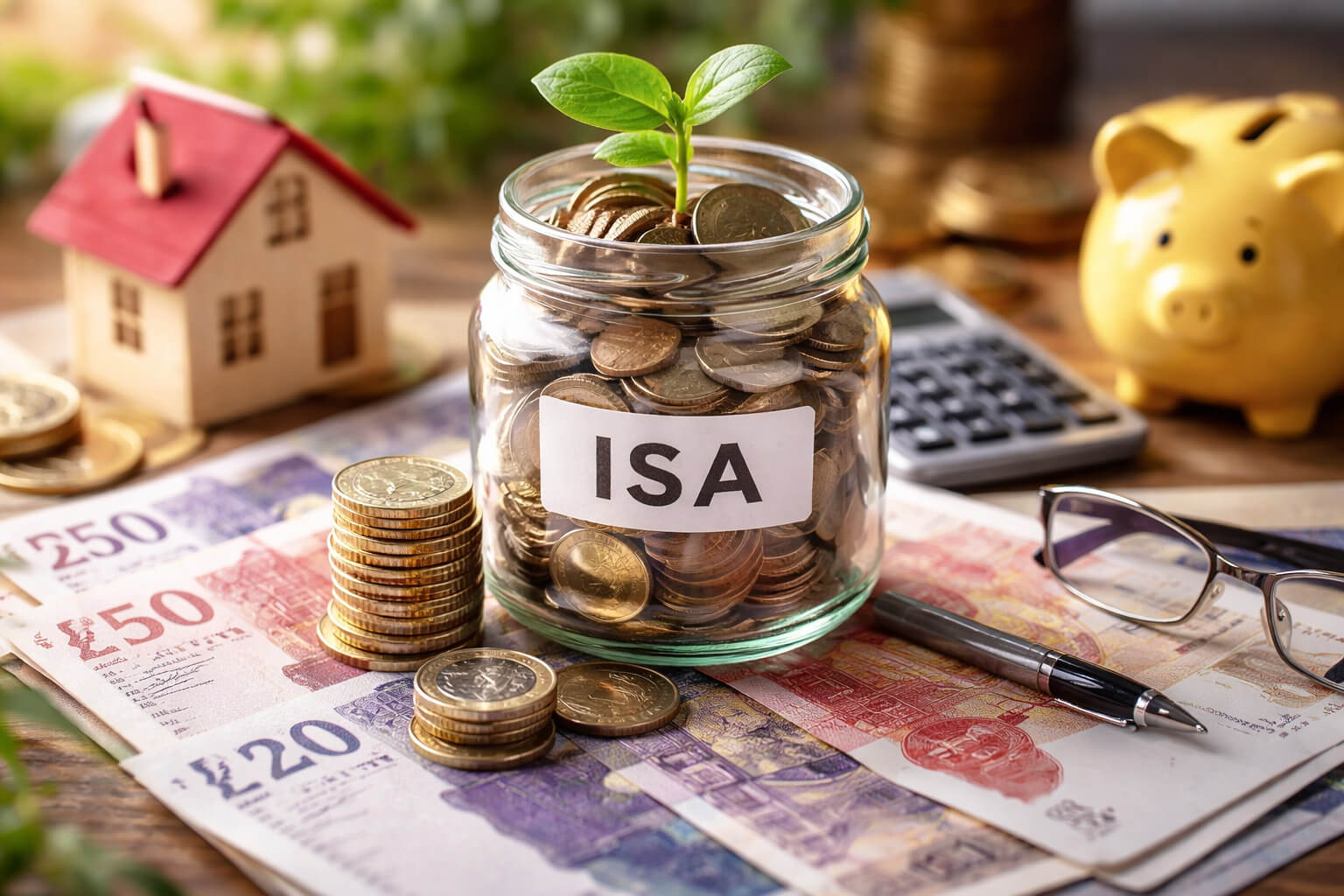
Planning for retirement can feel like trying to pack for a trip you won’t take for decades. You know it’s important—but where do you even start? One of the most useful tools available in the UK is the Individual Savings Account (ISA).
It’s simple in concept: you save or invest money, and you don’t pay tax on the interest or growth. Over time, that tax-free advantage can make a big difference. But here’s the real question: which ISA is actually best for retirement savings?
The answer isn’t one-size-fits-all. Different ISAs serve different purposes, and the “best” option depends on your age, risk comfort, and how hands-on you want to be. This guide will walk you through everything—clearly, calmly, and simply—so you can make confident decisions about your future.
Understanding ISAs
An ISA (Individual Savings Account) in the UK is best thought of as a simple, tax-friendly “container” for your money. You can use it to save cash or invest, just like a normal account—but with one big perk: you don’t pay tax on anything it earns.
That means no tax on interest, no tax on investment growth, and no need to even report it on a tax return. It’s designed to help people grow their money more efficiently over time. Each year, you’re given an allowance (currently up to £20,000), and you can split that across different types of ISAs if you like.
Think of it like putting your savings in a protective bubble—whatever happens inside stays yours, untouched by tax. There are a few different types of ISA, but they all follow this same simple idea. A Cash ISA works like a regular savings account, a Stocks and Shares ISA lets you invest for potentially higher growth, and a Lifetime ISA adds a government bonus if you’re saving for a home or retirement.
The key thing to remember is that an ISA isn’t a specific product—it’s more like a wrapper that sits around your money. Once your money is inside that wrapper, it can grow freely without tax getting in the way. Over time, that can make a meaningful difference, which is why ISAs are such a popular and practical tool for long-term saving in the UK.
What Are The Different Types Of ISA?
There are four main types of ISA in the UK:
- Stocks and Shares ISA
- Lifetime ISA (LISA)
- Cash ISA
- Innovative Finance ISA
For retirement planning, the first three are the most relevant.
What is a help to buy: ISA?
A Help to Buy: ISA was a UK government-backed savings account designed to help first-time buyers save for a deposit on their first home. The government offered a 25% bonus on eligible savings, up to a maximum government bonus of £3,000.
You could save up to £200 per month, with an initial deposit of up to £1,200. The scheme could be used towards a qualifying first home costing up to £250,000 (£450,000 in London). The important point is that Help to Buy: ISAs are now closed to new applicants.
If you already have one, you can continue saving into it under the scheme’s rules and claim the government bonus until 1 December 2030, subject to eligibility. Existing holders can also consider transferring their savings to another ISA, including a Lifetime ISA, but the rules and potential bonuses can differ, so it’s worth checking the transfer conditions before moving your money.
Why ISAs Matter for Retirement
You might be thinking: “Aren’t pensions enough?”
Pensions are fantastic—but ISAs add something different: flexibility. Unlike pensions, which are usually locked away until later in life, ISA savings can be accessed whenever you need them. That means they can act as a helpful “bridge” before retirement, or as extra income alongside a pension.
Another big advantage is tax simplicity. With ISAs, there’s no tax when you take money out—ever. That’s a refreshing change compared to pensions, where withdrawals can be taxed.
1. Stocks and Shares ISA – The Retirement Powerhouse
A Stocks and Shares ISA is simply a way to invest your money while keeping all the growth completely tax-free. Instead of leaving your money sitting in cash, you use this type of ISA to invest in things like company shares, funds, or bonds, with the aim of growing your savings over time.
The key idea is that it acts like a protective “wrapper”—anything your investments earn inside it (whether that’s profit or income) isn’t taxed in the UK, and you can invest up to £20,000 each year across your ISAs. Think of it as giving your money a chance to work harder for you, rather than just sitting still.
The important thing to remember is that, unlike a regular savings account, the value of your investments can go up and down, so it’s best suited for longer-term goals like retirement rather than quick wins. You’re in control of how your money is invested (or you can choose a managed option), and you can usually access it whenever you need—but giving it time helps smooth out the ups and downs.
Simple put, a Stocks and Shares ISA is a flexible, tax-free way to grow your money over the years, with a bit more excitement—and potential reward—than keeping it in cash.
How Do Stocks and Shares ISA Work?
A Stocks and Shares ISA is a tax-efficient investment account that allows you to invest your savings in assets such as company shares, investment funds, bonds and ETFs without normally paying UK Income Tax or Capital Gains Tax on the returns.
You put money into the ISA and choose investments available through your provider. Your investments can increase or decrease in value, and you may also receive dividends or interest. For the 2026/27 tax year, you can contribute up to £20,000 across all your ISAs, subject to the ISA rules.
Unlike a Cash ISA, your money is invested rather than simply earning interest, so a Stocks and Shares ISA is generally more appropriate for long-term investing, where you can accept some investment risk. The main advantages are tax-free investment growth, tax-free dividends and flexibility: you can generally withdraw your money whenever you want without an ISA withdrawal penalty.
However, unlike a pension, you don’t receive pension tax relief on contributions, and unlike a Cash ISA, your investments are not guaranteed to retain their value.
Why it’s great for retirement;
- Higher growth potential: Historically, investments tend to outperform cash over the long term.
- Tax-free growth: No tax on profits or income from investments.
- Flexible access: You can withdraw money whenever needed
Think of it like planting a tree. It may take time to grow, but if you leave it alone long enough, it can become something substantial.
The trade-off
Of course, there’s no such thing as a free lunch. Investments can go up and down. That means your balance may dip at times—especially in the short term.
That’s why this ISA works best if you’re investing for at least five years, ideally much longer.
Who it suits
- People with 5–10+ years until retirement
- Those comfortable with some ups and downs
- Anyone wanting to grow their savings over time
First Direct Stocks and Shares ISA
First direct offers a Stocks and Shares ISA through its sharedealing service. It is a self-select ISA, meaning you choose the investments yourself rather than having a fund manager select them for you. With a first direct Stocks and Shares ISA, you can invest in most UK and Irish shares listed on the London Stock Exchange, UK government gilts and a range of UK-listed ETFs.
Investments can rise or fall, so first direct recommends treating investing as a medium- to long-term commitment of at least five years.
Key points:
- Tax benefits: Income and capital gains within the ISA are generally free from UK Income Tax and Capital Gains Tax.
- ISA allowance: The overall ISA allowance is £20,000 for 2026/27.
- Eligibility: You generally need to be 18+, UK resident (with certain exceptions), and have a first direct current account for the sharedealing service.
- Dividends: Dividends from investments are collected and placed into your ISA settlement account.
- Transfers: You can transfer existing ISAs from other providers, with first direct stating that transfers can take up to six weeks.
Stocks and Shares ISA Dividends
Dividends from a Stocks and Shares ISA are payments you may receive when you invest in dividend-paying shares or funds. The key benefit is that dividends received within a Stocks and Shares ISA are generally free from UK Income Tax and Dividend Tax, regardless of how much you receive.
You also do not normally need to declare ISA dividends on your tax return. You can choose to withdraw the dividends as income or reinvest them to buy more investments, potentially helping your savings grow through compounding.
However, dividends are not guaranteed. Companies can reduce, suspend or increase their dividend payments, and the investments themselves can rise or fall in value. A Stocks and Shares ISA is therefore generally more suitable for people investing for the longer term who are comfortable accepting investment risk in exchange for the potential for capital growth and dividend income.
Can You Withdraw From A Stocks and Shares ISA?
You can withdraw money from a Stocks and Shares ISA at any time in the UK. Unlike a pension or Lifetime ISA, there is generally no minimum age and no withdrawal penalty. You may need to sell some of your investments first before withdrawing cash, and the time it takes to receive the money depends on your provider and the investments you hold.
Withdrawals from a Stocks and Shares ISA are generally free from UK Income Tax and Capital Gains Tax. However, taking money out can reduce the amount you have invested and therefore limit potential future growth. If your ISA is flexible, you may also be able to withdraw money and replace it within the same tax year without affecting your annual ISA allowance; not all ISAs offer this flexibility, so check with your provider.
Stocks and Shares ISA Taxation
A Stocks and Shares ISA is highly tax-efficient in the UK. You generally do not pay UK Income Tax or Capital Gains Tax on investment returns held within the ISA. This means dividends from shares and funds can usually be received without Dividend Tax, and if your investments increase in value, you normally do not pay Capital Gains Tax when you sell them.
You also generally do not need to declare these ISA investment returns on your tax return. The tax benefits apply while your money remains within the ISA, and you can generally withdraw money without paying tax on the withdrawal.
However, there is an annual ISA contribution limit across your ISAs. For the 2026/27 tax year, this is £20,000. Remember that while the ISA itself is tax-efficient, the investments you hold can still fall in value, so you can lose money as well as potentially make gains.
Can You Have More Than 1 Stocks and Shares ISA?
2. Lifetime ISA (LISA) – The Bonus Booster
A Lifetime ISA (often called a LISA) is a savings account designed to give your money a helpful boost, especially if you’re planning for your first home or later life. You can open one if you’re aged 18 to 39, and each year you can save up to £4,000—then the government adds a generous 25% bonus on top, which means up to £1,000 extra every year.
The idea is simple: you put money in, the government gives it a boost, and it grows tax-free over time. You can withdraw the money without penalty if you’re buying your first home or once you turn 60, making it a handy option for long-term goals like retirement.
The only thing to watch is that it’s not as flexible as a regular savings account. If you take money out for any other reason, there’s a withdrawal charge that can eat into both your savings and the bonus. Think of a LISA as a “locked treasure chest”—it rewards patience and planning, but it’s best used when you’re confident you won’t need the money early.
The Lifetime ISA is a bit like getting a helping hand from the government.
Why it’s great for retirement
- Free money: That 25% bonus is hard to ignore
- Tax-free withdrawals after age 60
- Can be used alongside other ISAs or pensions
For example, if you save £4,000, you instantly get £5,000. That’s a powerful boost over time.
The trade-off
There are a few catches:
- You must be aged 18–39 to open one
- You can’t access the money freely (unless buying a first home or after age 60)
- Early withdrawals come with penalties
In fact, withdrawing early can actually reduce your savings, not just remove the bonus.
Who it suits
- Younger savers planning ahead for retirement
- People happy to lock money away long term
- Those wanting a simple, boosted savings option
How Many Lifetime ISAs Can I Have?
You can have more than one Lifetime ISA (LISA) in the UK, but there are important limits. You can only pay into one Lifetime ISA during each tax year, and the combined amount you contribute to all your ISAs—including Cash ISAs, Stocks and Shares ISAs, and other ISA types—must stay within the annual ISA allowance.
The Lifetime ISA itself has a £4,000 annual contribution limit, and the government adds a 25% bonus on eligible contributions, up to £1,000 per tax year.You can also hold multiple LISAs with different providers if you wish, but you generally cannot contribute to more than one LISA in the same tax year.
A LISA can be used to help buy your first home or for later-life savings from age 60, subject to the relevant rules. Withdrawals for other purposes will normally incur a 25% withdrawal charge, which can mean getting back less than you originally paid in.
Lifetime ISA Withdrawal
A Lifetime ISA (LISA) withdrawal is allowed at any time, but whether you pay a charge depends on why you are taking the money out. You can withdraw your LISA savings without a withdrawal charge if you are using them to buy your first home, you are aged 60 or over, or you are terminally ill with less than 12 months to live.
For a first-home purchase, the property must generally cost £450,000 or less, and the LISA must have been open for at least 12 months. If you withdraw money for another reason before age 60, you normally face a 25% withdrawal charge.
This charge applies to the amount withdrawn, including the government bonus. For example, if your LISA is worth £10,000 and you withdraw the entire amount for an unauthorised reason, a £2,500 charge would leave you with £7,500.
Lifetime ISA For Retirement
A Lifetime ISA (LISA) can be used as a long-term savings option for retirement, although it is different from a traditional pension. You can contribute up to £4,000 per tax year until you reach age 50, and the government adds a 25% bonus on eligible contributions, up to £1,000 a year.
You can then access the money without a withdrawal charge from age 60, making a LISA potentially useful for building additional retirement savings alongside a workplace or personal pension. One advantage of a LISA is that withdrawals from age 60 are generally tax-free, whereas pension withdrawals can be subject to Income Tax depending on how much you take and your other income.
However, LISAs have contribution limits and the government bonus is capped, so they are not necessarily a replacement for a pension. For retirement planning, a LISA can potentially complement your pension, particularly if you want another tax-efficient way to save for later life.
Transfer To Lifetime ISA
Yes, you can transfer money from another ISA into a Lifetime ISA (LISA), provided you meet the LISA eligibility requirements. The transfer should be arranged directly between the ISA providers rather than you withdrawing the money yourself. Importantly, the amount transferred into the LISA counts towards the £4,000 annual LISA contribution limit for the tax year, and you can receive the 25% government bonus on the transferred amount, subject to the applicable limits.
For example, if you transfer £4,000 from a Cash ISA into a LISA, that uses your full £4,000 LISA allowance for that tax year and could attract a £1,000 government bonus. The transfer does not necessarily use up your overall annual ISA allowance again because the money was already held in an ISA.
However, transferring savings into a LISA means accepting the LISA withdrawal rules, so consider whether you might need access to the money before age 60 or for a purpose other than buying your first home.
Transfer Help To Buy ISA to LISA
Yes, but there is an important distinction. A Help to Buy: ISA can be transferred to a Lifetime ISA (LISA) if you have a LISA and the provider accepts transfers. You should arrange the transfer directly through the LISA provider rather than withdrawing the money yourself.
However, Help to Buy: ISAs are no longer available to open, and the government bonus rules are different from those of a LISA. If you transfer a Help to Buy: ISA into a LISA, the amount transferred generally counts towards the £4,000 annual LISA contribution limit.
A 25% LISA government bonus may apply to eligible transferred funds, but special transitional rules can affect transfers from Help to Buy: ISAs. If you’re transferring specifically to use the money for a first home, check the rules carefully because the property price limits, withdrawal rules and qualifying requirements differ between the two schemes.
Lifetime ISA Penalty Withdrawal
The Lifetime ISA (LISA) withdrawal penalty is usually a 25% government withdrawal charge if you take money out before age 60 for a reason that is not an approved withdrawal. You can generally withdraw without the charge if you are using the money to buy your first home (subject to the LISA rules), have reached age 60, or are terminally ill with less than 12 months to live.
The 25% charge applies to the amount withdrawn, including the government bonus. For example, if you contribute £4,000 to a LISA, the government could add a £1,000 bonus, giving you £5,000. If you then make an unauthorised withdrawal of the full £5,000, a 25% charge would be £1,250, leaving you with £3,750.
This means you could lose some of your original savings, not simply the government bonus, so it’s important to consider the withdrawal rules before using a LISA for long-term savings.
Lifetime ISA Deadline
The Lifetime ISA (LISA) contribution deadline is the 5th of April each year. By this date, you are required to have made all contributions that count towards that tax year’s allowance. The LISA allows you to contribute up to £4,000 per tax year, with a 25% government bonus on eligible contributions, up to £1,000 per year. The new tax year begins on 6 April, giving you a fresh annual allowance.
3. Cash ISA – The Safe and Steady Option
A Cash ISA is the simplest type of Individual Savings Account in the UK—it works a lot like a regular savings account, but with a valuable bonus: you don’t pay tax on the interest you earn. You can save up to your yearly ISA allowance (currently £20,000 across all ISAs), and any interest your money makes stays completely yours, untouched by tax.
It’s a straightforward, low-risk way to grow your savings, making it especially appealing if you prefer stability and easy access to your money. Think of a Cash ISA as a calm, reliable place to park your savings—it won’t have the ups and downs of investing, but it also won’t grow as quickly over time.
Many Cash ISAs offer flexible options, meaning you can take money out and put it back in without losing your allowance, depending on the provider. It’s ideal if you want peace of mind, easy access, and a tax-free way to earn interest without any surprises.
Cash ISAs are the simplest type. You put money in, earn interest, and pay no tax on it.
How Does A Cash ISA Work?
A Cash ISA is a tax-efficient savings account available in the UK. You deposit money with a bank or building society, and the provider pays you interest on your savings. Unlike a standard savings account, interest earned inside a Cash ISA is generally free from UK Income Tax.
Your money isn’t invested in the stock market, so you don’t face investment losses from market movements. For the 2026/27 tax year, you can save up to £20,000 across all your ISAs, although individual Cash ISA providers may set their own minimum or maximum deposit requirements.
Depending on the account, you may have instant access to your money, or you may need to keep it saved for a fixed period to receive a particular interest rate. Cash ISAs can therefore be useful for short- to medium-term savings where protecting your money and earning tax-free interest are priorities.
Benefits of cash ISA
- No risk to your savings
- Easy access options available
- Ideal for short-term goals or emergency funds
If Stocks and Shares ISAs are like a rollercoaster, Cash ISAs are more like a calm train ride—steady and predictable.
The trade-off
The downside is growth. Cash ISAs typically offer lower returns than investments, especially over long periods.
Over decades, this difference can really add up. In fact, long-term investing has historically produced much larger outcomes than saving in cash alone.
Who it suits
- Those close to retirement
- People who prefer certainty over growth
- Anyone building a safety buffer
Cash ISA Withdrawals
You can generally withdraw money from a Cash ISA at any time, but the exact rules depend on the type of Cash ISA you have. An easy-access Cash ISA may allow withdrawals without a penalty, while a fixed-rate Cash ISA may restrict withdrawals or charge a penalty for accessing your money before the fixed term ends.
If your Cash ISA is flexible, you can normally withdraw money and replace it during the same tax year without the replacement counting towards your ISA allowance again. For example, if you withdraw £5,000 from a flexible ISA, you may be able to put that £5,000 back later in the same tax year in addition to your usual allowance. Not every Cash ISA is flexible, so check your provider’s terms before withdrawing money.
How To Transfer A Cash ISA?
To transfer a Cash ISA to another provider, first choose a new Cash ISA and check that the provider accepts ISA transfers. Then ask the new provider to arrange the transfer for you. You should not simply withdraw the money from your existing Cash ISA and deposit it into the new account, as doing this could mean losing the ISA’s tax-free status and may use up part of your annual ISA allowance.
You can usually transfer all or part of your existing Cash ISA, depending on the terms of the accounts involved. If you’re transferring money you paid into an ISA during the current tax year, you generally need to transfer the whole amount to preserve its ISA status.
Before transferring, check whether your current provider charges an exit fee, whether you will lose any interest, and whether the new account offers a better interest rate or terms.
Difference Between Cash ISA And Savings Account
A Cash ISA and a regular savings account both allow you to save money and earn interest, but the main difference is how the interest is taxed. Interest earned in a Cash ISA is generally tax-free, meaning you don’t pay Income Tax on it.
A standard savings account doesn’t have this special tax wrapper, although you may be able to earn some interest tax-free through your Personal Savings Allowance. For most basic-rate taxpayers, this allows up to £1,000 of savings interest tax-free each tax year; the allowance is lower for higher-rate taxpayers.
Another difference is the annual ISA allowance. For the 2026/27 tax year, you can put up to £20,000 across your ISAs, including Cash ISAs. A regular savings account isn’t subject to this £20,000 ISA limit. In simple terms, a Cash ISA can be particularly useful if you have substantial savings and want to protect your interest from tax, while a regular savings account may offer greater flexibility or a competitive interest rate without using your ISA allowance.
Co op Bank Cash ISA
If you mean a Co-operative Bank Cash ISA, it is a savings account that lets you earn interest tax-free while keeping your money in cash rather than investing it.
As of July 2026, The Co-operative Bank offers several Cash ISA options:
- Cash ISA: 1.40% AER variable, with access when you need it.
- Online Cash ISA: 2.00% AER variable, available to existing Co-operative Bank current-account customers.
- 1-year Fixed Rate Cash ISA: 4.34% AER fixed.
- 2-year Fixed Rate Cash ISA: 4.34% AER fixed.
You can generally deposit from £1 up to the £20,000 annual ISA allowance for 2026/27. The Co-operative Bank also accepts ISA transfers, but you should use the official ISA transfer process rather than withdrawing the money yourself, so you don’t unnecessarily lose its tax-free status.
Top Flexible Cash ISA
If you’re looking for a top flexible Cash ISA in the UK, don’t focus only on the highest interest rate. A flexible ISA lets you withdraw money and replace it within the same tax year without the replacement counting again towards your ISA allowance, subject to the provider’s rules.
As of late July 2026, some flexible options include:
- Plum Cash ISA — around 4.60% AER in recent comparisons and listed as flexible.
- Chip Smart Cash ISA — around 4.55% AER and listed as flexible, although its product terms and rates have changed recently, so check before applying.
- Trading 212 Cash ISA — currently among the strongest easy-access Cash ISA options, although you should confirm whether the current account is classified as flexible before relying on the flexible ISA rules.
Important: “easy access” and “flexible ISA” are not the same thing. An account can allow withdrawals but still not allow you to replace withdrawn money without affecting your ISA allowance. Always check specifically for “Flexible ISA” in the provider’s terms. Rates can change frequently, so the current rate should be checked immediately before opening an account.
How Many Cash ISAs Can You Open In A Year?
You can open and pay into more than one Cash ISA in the same tax year. Since April 2024, UK rules have allowed you to subscribe to multiple ISAs of the same type, provided you stay within the overall annual ISA allowance.
For the 2026/27 tax year, the overall ISA allowance is £20,000. So, for example, you could put £10,000 into one Cash ISA and £10,000 into another. There is no set number of Cash ISAs you can have; the important restriction is how much you contribute, rather than how many accounts you open.
One important upcoming change: from 6 April 2027, the Cash ISA contribution limit will be £12,000 for people under 65, while the overall ISA allowance remains £20,000. For people aged 65 or over, the Cash ISA limit remains £20,000.
Cash ISA 5 Year Fixed Rate
A 5-year fixed-rate Cash ISA is a savings account where you lock your money away for five years in exchange for a fixed interest rate. Your interest is generally tax-free because the money is held within an ISA. It can be attractive if you don’t expect to need the money during the five-year term and want certainty over the rate you’ll receive.
As of 20 July 2026, Which? listed Furness Building Society’s 5 Year Fixed Rate ISA at 4.75% AER as the highest five-year fixed Cash ISA in its comparison. Other options included Tandem at 4.67% and Hodge Bank at 4.66%. Rates can change, so check the latest terms before applying.
The main downside is access. Fixed ISAs generally restrict withdrawals or apply an interest penalty if you need your money early. If you think you may need access to your savings, an easy-access or shorter-term fixed Cash ISA may be more suitable. Five years is a long commitment, so also consider whether interest rates could rise while your money is locked in.
4. Innovative Finance ISA
An Innovative Finance ISA (IFISA) is a different twist on saving and investing—it lets you lend your money directly to people or businesses, usually through online platforms, and earn interest in return. Instead of your money sitting in a bank or being invested in the stock market, it’s working more like a loan, and the interest you earn is completely tax-free, just like other ISAs.
According to MoneyHelper, the IF ISA is designed for peer-to-peer lending and similar investments, giving savers another way to grow their money beyond traditional options. For retirement, an IFISA can be appealing because it often offers higher potential returns than a standard savings account, which can help your money grow a bit faster over time.
It can also provide a steady stream of interest payments, which may be useful as an extra source of income later in life. Think of it as adding another “engine” to your retirement plan—working alongside pensions or other ISAs to boost your overall savings.
Why it’s useful for retirement
- An Innovative Finance ISA (IFISA) lets you earn tax-free interest by lending money to individuals or businesses
- It can offer higher potential returns than traditional savings accounts
- All earnings stay completely free from income tax, helping your money grow more efficiently
- It can provide a regular income stream, which may be useful in retirement
- Works well as a way to diversify your retirement savings alongside pensions and other ISAs
- Best suited for people who already have secure savings in place and are comfortable taking some risk
The trade-off
Higher potential returns usually come with higher risk. Your money isn’t protected in the same way as cash in a bank, and there’s a chance borrowers may not repay what they owe, meaning you could lose some of your savings.
Who it suits
IFISAs tend to suit people who are comfortable taking on a bit more risk, already have safer savings in place, and are looking to diversify their retirement plan rather than rely on this as their main source of income.
Innovative Finance ISA Cashback
IF ISA offers do exist, but they are provider-specific promotions, not a standard feature of an IFISA. An IFISA allows you to hold investments such as peer-to-peer loans, crowdfunding debentures and certain alternative finance investments while receiving ISA tax advantages.
However, these investments can carry significantly more risk than a Cash ISA, and your capital is not guaranteed.
Best Innovative Finance ISA
If you’re looking for the best Innovative Finance ISA (IFISA) in the UK, there isn’t one universal winner because IFISAs can invest in different types of assets and carry considerably more risk than Cash ISAs. HMRC says qualifying IFISA investments can include peer-to-peer loans, crowdfunding debentures and alternative finance arrangements.
Some providers currently highlighted by specialist comparisons include:
- Loanpad — attractive if you prioritise property-secured lending and diversification across many loans.
- CapitalRise — focuses on property-backed lending and is highlighted by 4thWay for its risk/reward profile.
- CapitalStackers — another property-backed IFISA option highlighted by 4thWay.
- Housemartin — offers access to property-related lending with a low minimum investment.
- Proplend — another specialist property-backed lending option included in 4thWay’s 2026 selection.
Important: an IFISA isn’t equivalent to a Cash ISA. Your investment can fall in value or you could lose some or all of your money, and IFISA investments generally aren’t protected by the FSCS in the way eligible bank deposits are. HMRC also makes clear that being an approved ISA investment does not guarantee returns or protect you against losses.
For most people who simply want safe, accessible savings, I’d look at a Cash ISA first. An IFISA is more appropriate for someone who understands the additional investment and liquidity risks and specifically wants exposure to alternative finance.
Bond ISA
A Bond ISA isn’t normally a separate ISA type in the UK. The term is often used to describe an ISA that holds bonds or bond-based investments, usually through a Stocks and Shares ISA or, in some cases, an Innovative Finance ISA.
With a Stocks and Shares ISA, you can potentially invest in government bonds (gilts), corporate bonds, bond funds and ETFs, depending on the provider. Any eligible interest or investment gains within the ISA are generally free from UK Income Tax and Capital Gains Tax. Your investments can, however, rise or fall in value.
If you’re looking for a fixed-return savings product, you may instead be thinking of a fixed-rate Cash ISA. This is different from investing in bonds: your money is held as cash and you receive a fixed interest rate for an agreed period, subject to the account’s terms.
Can I Have A Cash ISA And A Lifetime ISA?
Yes—you can absolutely combine ISAs in the UK, and it’s often a smart way to manage your money. This means you can have both a Cash ISA and a Lifetime ISA (LISA), rather than picking just one type. However, it is worth noting that they are separate types of ISA and even though you can hold savings in both at the same time, you are still required to you meet the eligibility requirements for a LISA.
For the 2026/27 tax year, the overall ISA allowance is £20,000, while the LISA has its own £4,000 annual contribution limit. Your LISA contributions count towards the overall £20,000 ISA allowance. For example, you could contribute £4,000 to a LISA and up to £16,000 to other ISAs, such as a Cash ISA, during the same tax year. The government can add a 25% bonus to eligible LISA contributions, up to £1,000 per year.
This flexibility is what makes ISAs especially useful for long-term planning, including retirement. By combining them, you can match your savings to different goals—easy access for emergencies, steady growth for the future, and even a government bonus through a Lifetime ISA.
It also gives you room to adjust over time as your needs change. You’re not locked into one approach—you can mix and match to create a plan that feels just right for you.
You can split your £20,000 annual allowance across different types—for example:
- £10,000 in a Stocks and Shares ISA
- £4,000 in a Lifetime ISA
- £6,000 in a Cash ISA
This approach gives you a balanced strategy:
- Growth (investments)
- Security (cash)
- Bonus (LISA)
Think of it as building a well-rounded team rather than relying on a single player.
Stocks and Shares ISA or Cash ISA?
A Cash ISA is generally better if you want to keep your money relatively low-risk and may need it in the short to medium term. Your savings earn interest, and eligible interest is tax-free. A Stocks and Shares ISA is more suitable for longer-term goals, typically five years or more, because your money is invested in assets such as shares, bonds and funds.
It has greater potential for growth but also carries the risk that your investments could fall in value. In simple terms, Cash ISA = stability and easier access, while Stocks and Shares ISA = higher potential growth with investment risk.
You can have both, and for the 2026/27 tax year, the overall ISA allowance is £20,000 across your ISAs. The right choice depends on how long you plan to invest, your financial goals, and how comfortable you are with investment risk.
What Makes an ISA “Best” for Retirement?
Instead of asking “Which ISA is best?”, a better question is: What do I need my money to do? This is because what makes an ISA “best” for retirement really comes down to how well it fits your personal goals, rather than one type being perfect for everyone.
A big factor is time—if retirement is many years away, an ISA that allows your money to grow (like investments) can be more helpful, while if you’re closer to retiring, keeping your savings steady and easy to access may matter more.
It’s also important to think about flexibility, since ISAs let you take money out whenever you need, which can be very useful alongside pensions that are more restricted. Another key ingredient is how comfortable you are with risk and how much control you want.
Some people prefer a smooth and predictable path, while others are happy to accept a few ups and downs in exchange for the chance of higher growth. The “best” ISA is simply the one that balances growth, safety, and access in a way that suits your lifestyle.
In many cases, a mix of different ISAs works best—giving you stability, growth, and flexibility all in one plan, like a well-balanced toolkit for your future.
Here are the key factors to consider:
1. Time Horizon
If retirement is far away, growth matters more → Stocks and Shares ISA
If it’s close, stability matters more → Cash ISA
2. Flexibility
Need access anytime? → Stocks and Shares or Cash ISA
Happy to lock it away? → Lifetime ISA
3. Risk Comfort
Prefer certainty? → Cash ISA
Comfortable with ups and downs? → Stocks and Shares ISA
4. Extra Boosts
Want government bonuses? → Lifetime ISA
Real-Life Example
Let’s imagine two people:
Sarah (Age 30)
- Opens a Stocks and Shares ISA
- Adds £300 a month
- Leaves it invested for 30 years
Her money has time to grow, ride out ups and downs, and potentially build a strong retirement pot.
David (Age 58)
- Uses a Cash ISA
- Keeps savings safe
- Plans to withdraw soon
For him, stability matters more than growth.
Same goal—different strategies.
Common Mistakes to Avoid
Even the best ISA won’t help much if it’s used poorly. Here are a few pitfalls to watch out for:
1. Leaving Money in Low-Interest Accounts
One of the most common mistakes is leaving your ISA savings in accounts with very low interest rates. While ISAs protect your money from tax, they don’t guarantee strong returns. In fact, many older accounts offer much lower rates than newer ones, meaning your money could grow far more slowly than it should.
Over time, this can make a surprisingly big difference. Even a small gap in interest rates can lead to thousands of pounds lost in potential growth over the years. The simple fix? Regularly check your ISA rate and don’t be afraid to switch providers if better options are available.
2. Being Too Cautious for Too Long
Playing it safe might feel comfortable, but being overly cautious—especially for long-term goals—can limit your growth. Keeping all your money in cash ISAs, for example, may protect it from ups and downs, but it also means missing out on the higher growth potential of investments over time.
If you have a long time horizon, like saving for retirement, a Stocks and Shares ISA could offer better growth opportunities. It’s about finding a balance that suits your comfort level while still giving your money a chance to grow meaningfully.
Keeping everything in cash for decades can limit growth significantly.
3. Ignoring the Lifetime ISA Bonus
The Lifetime ISA (LISA) offers a generous 25% government bonus on contributions, which can significantly boost your savings. However, many people either overlook it or don’t fully understand how it works.
That said, it’s important to use it correctly. There are rules around age limits, contribution caps, and withdrawals—getting these wrong can lead to penalties that reduce your savings. So while the bonus is valuable, it’s worth understanding the rules before diving in.
If you’re eligible and saving for retirement, skipping the 25% bonus could mean missing out on thousands.
4. Not Reviewing Your Strategy
Another easy mistake is setting up an ISA and then forgetting about it. Your financial situation, goals, and even market conditions can change over time, so it’s important to check in on your ISA regularly.
A quick yearly review can help you see if your current approach still makes sense—whether that’s adjusting your investments, increasing contributions, or switching to a better-performing account. Staying engaged doesn’t take much time, but it can make a big difference to your long-term results.
Your ideal ISA mix should change as you get closer to retirement.
How ISAs Fit Alongside Pensions
It’s not ISA vs pension—it’s ISA and pension.
Pensions:
- Tax relief when you contribute
- Restricted access
- Often include employer contributions
ISAs:
- No tax on withdrawals
- Flexible access
- No contribution restrictions beyond the annual limit
Together, they create a more flexible and balanced retirement plan.
Which ISA Is Best?
Let’s keep it simple:
- Best for long-term growth: Stocks and Shares ISA
- Best for younger savers with discipline: Lifetime ISA
- Best for safety and short-term needs: Cash ISA
But the real “best” option? A mix of them.
A Simple Strategy to Get Started
If you’re unsure where to begin, here’s a straightforward approach:
- Start with a Stocks and Shares ISA for long-term growth
- Add a Lifetime ISA if you’re eligible
- Keep some savings in a Cash ISA for peace of mind
You don’t need to be perfect—you just need to start.
Conclusion
When it comes to choosing the best ISA for retirement, there isn’t one account that wins for everyone. A Stocks and Shares ISA can be powerful for long-term growth if you have plenty of time before retirement and are comfortable with investment risk.
A Lifetime ISA can provide a valuable 25% government bonus if you’re eligible and happy to follow its withdrawal rules. And a Cash ISA can provide stability, accessibility and a tax-efficient home for savings when protecting your money matters more than chasing growth.
But you don’t necessarily have to choose just one. For many UK savers, the most effective approach may be to combine different types of ISAs with a pension, giving each one a specific job. Your pension can provide the foundation for your retirement income, while your ISAs can give you greater flexibility and control over when and how you access your money.
The most important thing is not simply finding the ISA with the highest rate or the biggest potential return. It’s understanding what you are saving for, when you will need the money, how much investment risk you can accept, and how much flexibility you want.
And remember: your strategy should evolve with you. What makes sense in your 30s may look very different when you reach your 50s or approach retirement. So don’t wait for the “perfect” moment or the perfect account.
Understand your options. Review your current savings. Make sure your money is working towards the retirement you actually want—and start building that future today, because the biggest retirement mistake isn’t necessarily choosing the wrong ISA. It’s doing nothing at all.
Disclaimer-The information provided in this article is for general information and educational purposes only and should not be considered financial, investment, tax, or legal advice. Everyone’s financial circumstances and retirement goals are different. Before making any decisions about ISAs, pensions, investments, or your retirement planning, you should consider seeking advice from a qualified and regulated financial adviser who can assess your individual circumstances. Tax rules, allowances, investment products and government policies can change over time. Always check the latest information and terms before making any financial decision.