
One of the most common—and important—questions people ask is; How much pension do I actually need to retire comfortably? It’s a great question, but the answer isn’t one-size-fits-all.
Some people picture a quiet retirement with simple living, while others dream of travelling, hobbies, and enjoying more freedom. The amount you’ll need depends on the lifestyle you want—but the good news is, once you understand a few simple ideas, it becomes much easier to figure out.
In this guide, we’ll walk you through:
- What “comfortable retirement” really means
- Typical UK retirement costs
- How much you might need
- Simple ways to estimate your own target
What Does “Comfortable Retirement” Really Mean?
A “comfortable retirement” in the UK isn’t about luxury yachts or endless holidays (unless that’s your dream!), but about having enough money to enjoy life without constantly worrying about bills.
It means covering your everyday needs with ease, having a bit extra for treats, and feeling confident that you can handle life’s little surprises. For some, that might mean dining out now and then, travelling occasionally, or simply keeping up a lifestyle they already enjoy.
The idea of “comfortable” can look different for everyone, which is why it helps to think in terms of lifestyle levels. In the UK, retirement is often described in three broad ways—basic, moderate, and comfortable. These give you a clearer picture of what your future could look like and help you plan your pension around the kind of life you’d like to live later on.
Three Common Retirement Lifestyles
Basic Lifestyle
A basic lifestyle covers all the essentials you need to get by day to day. This includes things like food, housing costs, utility bills, and basic clothing. It’s about meeting your needs rather than focusing on extras, so life is simple and practical.
While this level provides security, there’s very little room for luxuries or spontaneous spending. You might not be dining out often or taking holidays, and budgeting will still play a big role. It suits those who are happy living modestly and keeping things straightforward.
- Covers essentials (food, bills, housing)
- Little room for extras
Moderate Lifestyle
A moderate lifestyle offers a bit more breathing room and flexibility. Along with covering your essentials, you’ll likely have some extra money for hobbies, eating out occasionally, and perhaps a holiday once a year. It’s a step up that allows you to enjoy life a little more without going over the top.
This level strikes a balance between comfort and control. You won’t need to watch every penny as closely, and you can maintain a lifestyle similar to what many people are used to during their working years. It’s often seen as a realistic and enjoyable goal for many retirees.
- Occasional holidays
- Eating out sometimes
- Comfortable but not extravagant
Comfortable Lifestyle
A comfortable lifestyle is where things start to feel more relaxed and enjoyable. You’ll have enough to cover your needs easily, plus plenty left over for regular treats, dining out, hobbies, and travel. It’s about having choices and not needing to think twice about most day-to-day spending.
At this level, you can enjoy a higher standard of living with fewer financial worries. Whether it’s upgrading your home, taking more frequent holidays, or simply enjoying your time without stress, a comfortable retirement gives you the freedom to live life on your own terms.
- Regular holidays
- More freedom to spend
- Enjoy hobbies and experiences
Most people aim for moderate to comfortable

How Much Does Retirement Cost in the UK?
The cost of retirement in the UK really depends on the kind of lifestyle you want to enjoy. Some people are happy keeping things simple, while others want a bit more freedom to travel, dine out, and enjoy hobbies.
As a rough guide, a basic lifestyle might require around £12,000–£15,000 per year for a single person, while a more moderate lifestyle could sit closer to £20,000–£30,000. If you’re aiming for a more comfortable retirement, where you can enjoy regular treats and a few luxuries, you might be looking at £30,000–£40,000 or more each year.
It’s also worth remembering that these figures can change depending on your personal situation. For example, if you’ve paid off your mortgage, your living costs may be lower, making retirement more affordable.
On the other hand, things like rent, rising energy bills, or unexpected expenses can push costs up. Couples can often share expenses, so their combined costs may not be double that of a single person, which can make planning a bit easier.
The good news is that you don’t have to reach these numbers overnight. Your state pension, any workplace or personal pensions, and other savings all work together to cover your retirement income. The key is to have a rough target in mind and build towards it over time. With steady planning and regular contributions, creating a retirement that feels comfortable and secure is absolutely within reach.
Let’s look at some realistic estimates.
Typical Annual Retirement Costs (UK Estimates)
- Basic lifestyle → ~£12,000–£15,000 per year
- Moderate lifestyle → ~£20,000–£30,000 per year
- Comfortable lifestyle → ~£30,000–£40,000+ per year
These figures can vary depending on:
- Housing (own vs renting)
- Location
- Personal lifestyle
Your lifestyle choices shape your target
What About the State Pension?
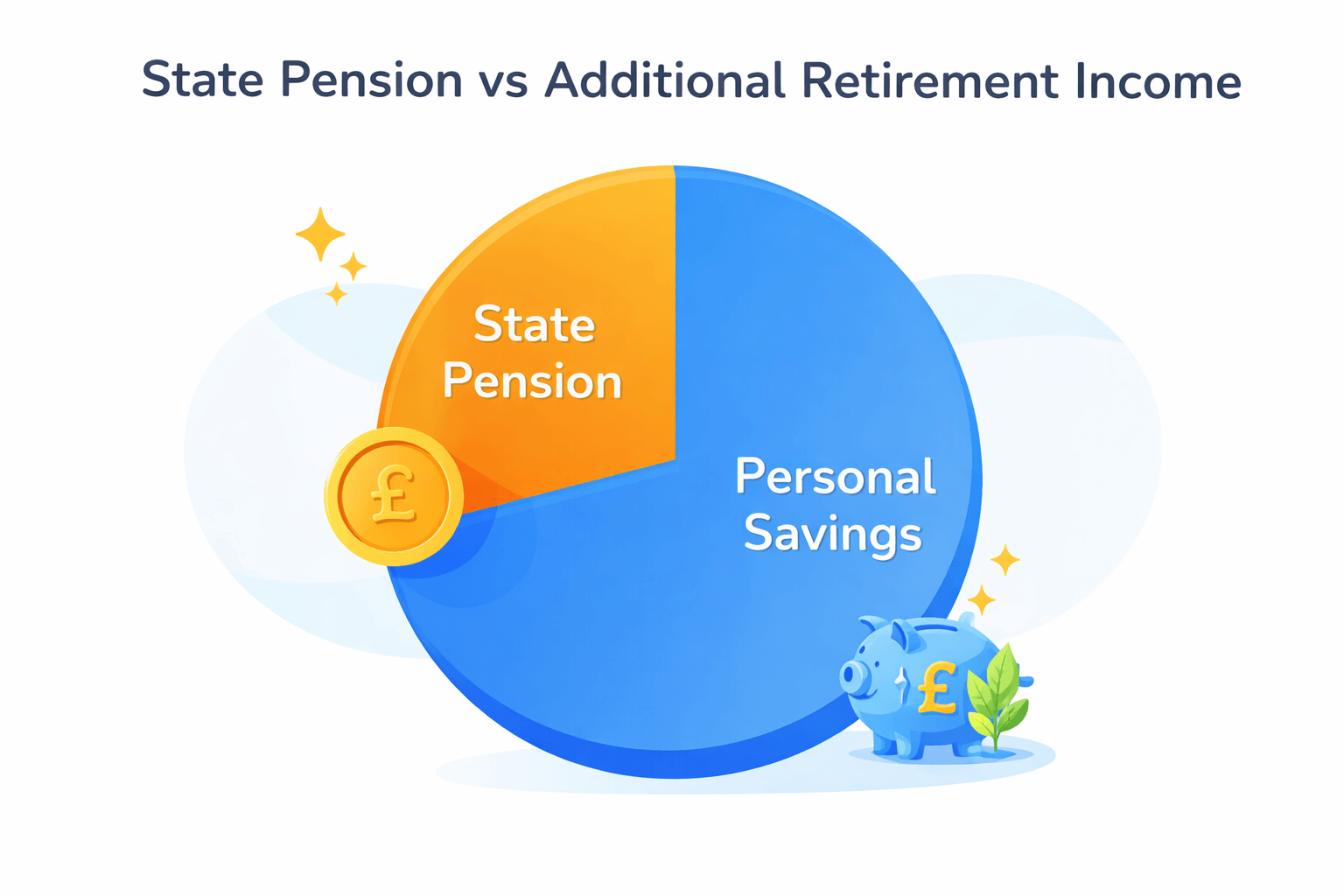
When you’re receiving the UK State Pension, it gives you a helpful starting point for covering your retirement costs, but it usually won’t be enough on its own for most people. The full State Pension currently pays just over £10,000 a year, which can cover some of the basics like food and utilities.
So, if your goal is a simple lifestyle, you may already be a good part of the way there—but for anything beyond the essentials, you’ll likely need extra income. For a more moderate lifestyle, where you can enjoy the occasional meal out, hobbies, and perhaps a yearly holiday, you might need around £20,000–£30,000 a year in total.
With the State Pension covering a portion of that, you’d need to make up the difference—roughly £10,000–£20,000—from workplace pensions, personal pensions, or other savings. This is where having your own pension pot really starts to make a noticeable difference in your day-to-day comfort.
If you’re aiming for a comfortable retirement with more freedom to travel, shop, and enjoy life without thinking too much about spending, your yearly costs could rise to £30,000–£40,000 or more. In that case, the State Pension acts as a solid base, but a larger personal or workplace pension will be needed to top it up.
The key takeaway is that while the State Pension is a great foundation, building additional savings gives you the flexibility to enjoy retirement on your own terms.
Retirement Cost Based On Current Estimate:
- Around £200+ per week
- Roughly £10,000–£11,000 per year
What this means:
The State Pension may cover:
- Basic living costs
But it usually won’t fully cover:
- Travel
- Leisure
- A more comfortable lifestyle
So, How Much Pension Do You Really Need?
How much pension a person in the UK really needs depends on the kind of lifestyle they want when they stop working. Some people are happy with a simple, steady routine, while others want more freedom to travel, enjoy hobbies, and spend a bit more comfortably.
A good way to think about it is to picture your ideal retirement and work backwards from there—what would you like your daily life to look like, and what might that cost each month? A helpful rule of thumb is to aim for a pension that can replace a good portion of your income, alongside your State Pension.
For many people, this means building enough savings to top up what the State Pension provides so they can live without financial stress. It might sound like a big number at first, but when you break it down into small, regular contributions over time, it becomes much more manageable—and far less intimidating.
Here’s a simple way to think about it:
Your pension should fill the gap between:
- Your desired lifestyle
- Your State Pension income
Example:
If you want:
- £30,000 per year
And State Pension gives:
- £10,000
You need:
- £20,000 per year from your pension
The “25x Rule” (Simple Estimation Method)
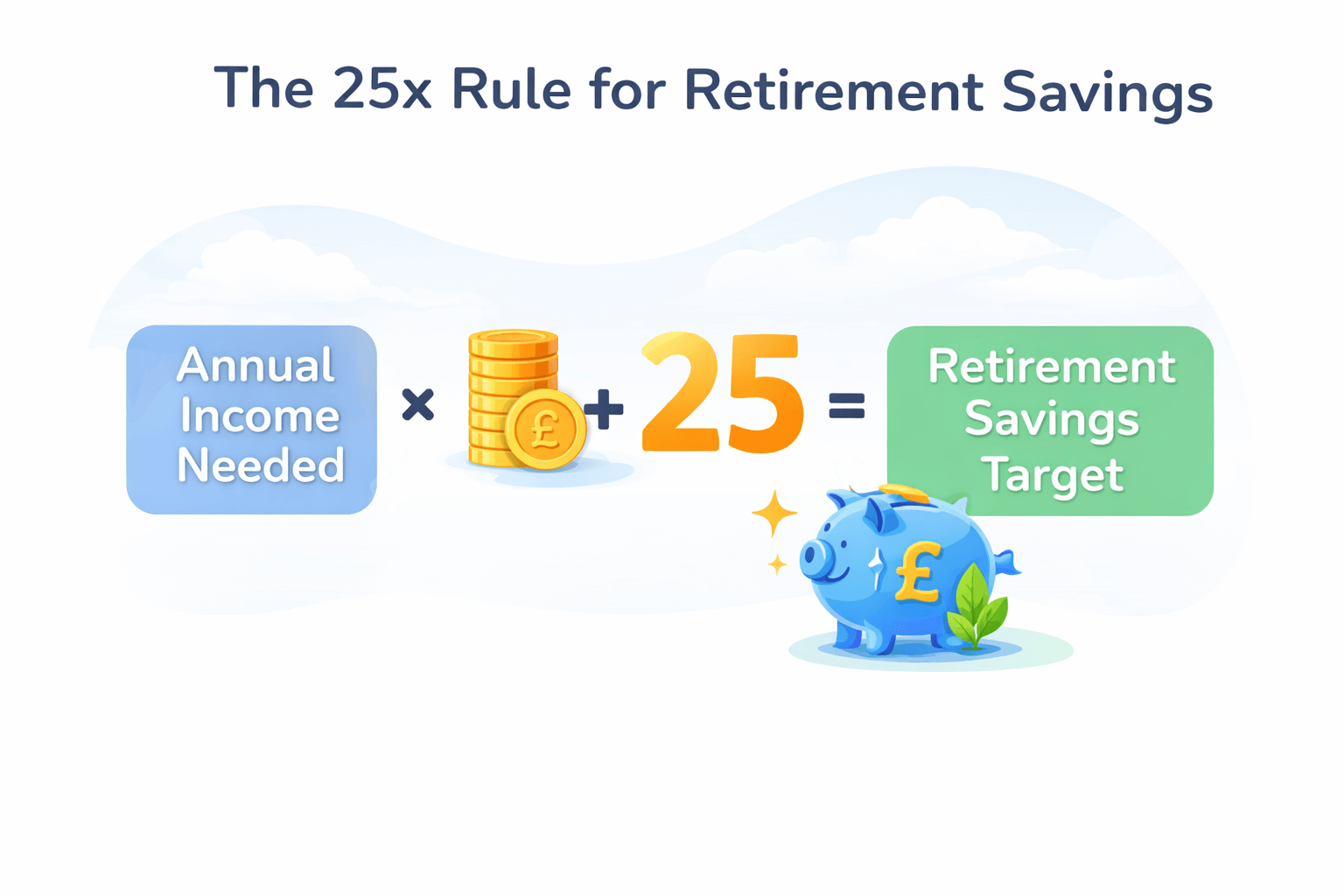
The “25x rule” is a simple and handy way to estimate how much you might need saved for retirement without getting lost in complicated maths. The idea is straightforward: take the amount of money you’d like to live on each year in retirement, and multiply it by 25.
That total gives you a rough target for your pension pot. It’s a quick way to turn a yearly income goal into a long-term savings number you can aim for. For example, if you think you’ll need £20,000 a year to live comfortably, you’d multiply that by 25, which gives you £500,000 as your target pension savings.
The rule is based on the idea that you can safely withdraw a small portion of your savings each year—around 4%—while still making your money last for many years. It’s not exact, but it gives you a useful ballpark figure to guide your planning.
Of course, the 25x rule is just a guide, not a one-size-fits-all answer. Your actual needs may be higher or lower depending on your lifestyle, other income like the State Pension, and how long you expect to be retired.
Still, it’s a great starting point that helps you picture your goal more clearly and gives you something simple to work towards as you build your pension over time.
A common rule of thumb:
Multiply your desired yearly income by 25
Example:
- £20,000 per year needed
→ £20,000 × 25 = £500,000 pension pot
This gives a rough estimate—not an exact number
Real-Life Pension Scenarios
Scenario 1: Basic Lifestyle
- Target: £15,000/year
- State Pension: £10,000
Needed: £5,000/year
Pension pot: ~£125,000
Scenario 2: Moderate Lifestyle
- Target: £25,000/year
- Needed: £15,000/year
Pension pot: ~£375,000
Scenario 3: Comfortable Lifestyle
- Target: £35,000/year
- Needed: £25,000/year
Pension pot: ~£625,000
These are guides—not strict rules
What Affects How Much You Need?
Figuring out how much you’ll need for retirement in the UK isn’t a one-size-fits-all answer—it really depends on your personal situation and the kind of life you want to live. Some people need less because their costs are lower, while others may need more to support a more active or flexible lifestyle.
The key is understanding the main factors that shape your spending so you can plan with confidence rather than guesswork. It helps to think of retirement as your future lifestyle, not just a number in the bank.
Where you live, how you spend your time, and even when you choose to retire all play a part in shaping how much you’ll need. By looking at these areas early on, you can build a clearer, more realistic plan that fits your goals and gives you peace of mind.
1. Housing Situation
Your housing situation is one of the biggest factors in your retirement costs. If you’ve paid off your mortgage, your monthly expenses can be much lower, making retirement more affordable. On the other hand, if you’re still renting or paying a mortgage, you’ll need to budget for those ongoing costs.
There are also choices like downsizing or moving to a more affordable area, which can reduce expenses and free up extra money. Planning ahead for where and how you want to live can make a big difference to how much you need overall.
- Mortgage-free → lower costs
- Renting → higher ongoing expenses
2. Lifestyle Choices
The kind of lifestyle you want in retirement plays a huge role in how much you’ll need to save. If you’re happy with a simple routine, your costs may stay fairly low. But if you’re dreaming of regular travel, dining out, or enjoying hobbies, you’ll need a bit more to support those plans.
It’s not about right or wrong—it’s about what makes you happy. Thinking about how you’d like to spend your time helps you build a pension plan that supports your ideal lifestyle, rather than limiting it.
- Travel often → higher costs
- Simple living → lower costs
3. Health & Unexpected Costs
Health is another important factor to consider. While many healthcare services are available, there can still be extra costs over time, such as treatments, support, or making changes to your home as you get older.
It’s also wise to leave room for unexpected expenses. Life can be unpredictable, and having a financial cushion means you won’t be caught off guard. Planning for these possibilities helps keep your retirement steady and stress-free.
- Medical needs
- Emergency expenses
4. Retirement Age
When you choose to retire can have a big impact on how much you’ll need. Retiring earlier means your savings need to last longer, so you may need a larger pension pot. Waiting a bit longer can give you more time to save and reduce the number of years your pension needs to cover.
It’s all about balance—finding a retirement age that works for your lifestyle and finances. Even a few extra working years can make a noticeable difference, helping you feel more secure when you finally decide to step away from work.
- Retire earlier → need more savings
- Retire later → need less
How to Estimate Your Own Number
Working out how much you’ll need for retirement in the UK doesn’t have to be complicated—it’s really about building a clear picture of your future and putting some simple numbers around it. Instead of guessing, you can break it down into small, easy steps that help you turn your ideal lifestyle into a realistic savings goal.
Think of it as connecting the dots between how you want to live and what it might cost. The goal isn’t to get a perfect number down to the last pound, but to create a solid estimate you can work towards with confidence.
Once you have a rough figure in mind, it becomes much easier to plan your pension, adjust your contributions, and feel in control of your financial future rather than leaving it to chance.
Step 1: Picture Your Lifestyle
What do you want your retirement to look like? Start by imagining what your retirement might look like day to day. Will you be travelling, enjoying hobbies, or keeping things simple and relaxed at home? The clearer your picture, the easier it is to understand what your future spending might look like.
This step is all about being honest with yourself about what makes you happy. Your version of retirement might be completely different from someone else’s, and that’s perfectly fine—it’s your lifestyle that matters most.
Step 2: Estimate Monthly Costs
Next, try to put a rough monthly cost on that lifestyle. Think about essentials like food, bills, and housing, then add in extras like entertainment, travel, or hobbies. You don’t need exact figures—just a reasonable estimate to guide you.
Be realistic, not perfect.
Once you have a monthly number, you can turn it into a yearly amount by multiplying it by 12. This gives you a clearer idea of how much income you’ll need each year during retirement.
Step 3: Subtract State Pension
If you expect to receive the State Pension, you can take that into account by subtracting it from your yearly target. This helps you see how much income you’ll need to generate from your own savings and pensions.
It’s a helpful way to break things down, because the State Pension acts as a foundation. From there, your personal or workplace pension fills in the gap to reach your desired lifestyle.
Step 4: Multiply by 25
Finally, take the yearly amount you still need and multiply it by 25. This gives you a rough estimate of the total pension savings you might aim for. It’s a simple way to turn an annual income goal into a long-term target.
This number doesn’t have to be exact—it’s just a guide to help you stay on track. As your plans or circumstances change, you can always adjust it, but it gives you a clear and motivating goal to work towards.
What If You’re Behind?
If you feel like you’re behind on your pension contributions in the UK, don’t panic—you’re definitely not alone, and it’s never too late to take action. Life happens, priorities shift, and sometimes retirement savings take a back seat.
The good news is that even small steps taken now can make a real difference over time. What matters most isn’t when you started, but what you choose to do next.
One of the simplest ways to catch up is by increasing your contributions, even if it’s just a little at first. You can also look at making one-off payments when you have extra income, like bonuses or busy work periods if you’re self-employed.
If you’re part of a workplace pension, checking whether you can boost your contributions (and get more from your employer) is a smart move. Small changes, done consistently, can help close the gap more than you might expect.
It’s also worth reviewing your plans and making a few practical adjustments. This could mean slightly delaying your retirement age, reviewing your spending goals, or making sure your pension is invested in a way that supports growth over time.
The key is to stay flexible and focused—there’s always room to improve your position. With a bit of consistency and a clear plan, you can still build a pension that supports a comfortable and confident retirement.
What you can do:
- Increase contributions
- Delay retirement slightly
- Combine pensions
Small improvements still make a big difference
Final Thoughts
Working out how much pension you need to retire comfortably in the UK might seem like a big question, but it really comes down to understanding your lifestyle, your goals, and taking simple, steady steps in the right direction.
From estimating your future costs to factoring in the State Pension and using easy methods like the 25x rule, you now have a clearer picture of what “comfortable” could look like for you. It’s not about chasing a perfect number—it’s about building a plan that fits your life.
The most important thing to remember is that every little step counts. Whether you’re just starting out, adjusting your contributions, or catching up, consistency and awareness go a long way. Your retirement journey is personal, and it can evolve over time as your needs change.
The amount you need for retirement might seem like a big number—but it becomes much more manageable when you break it down step by step. Stay flexible, keep checking in on your progress, and focus on building a future that gives you freedom, comfort, and peace of mind.
The information provided in this article is for general informational purposes only and is not intended as financial advice. Always consider your personal circumstances and seek professional guidance if needed.